
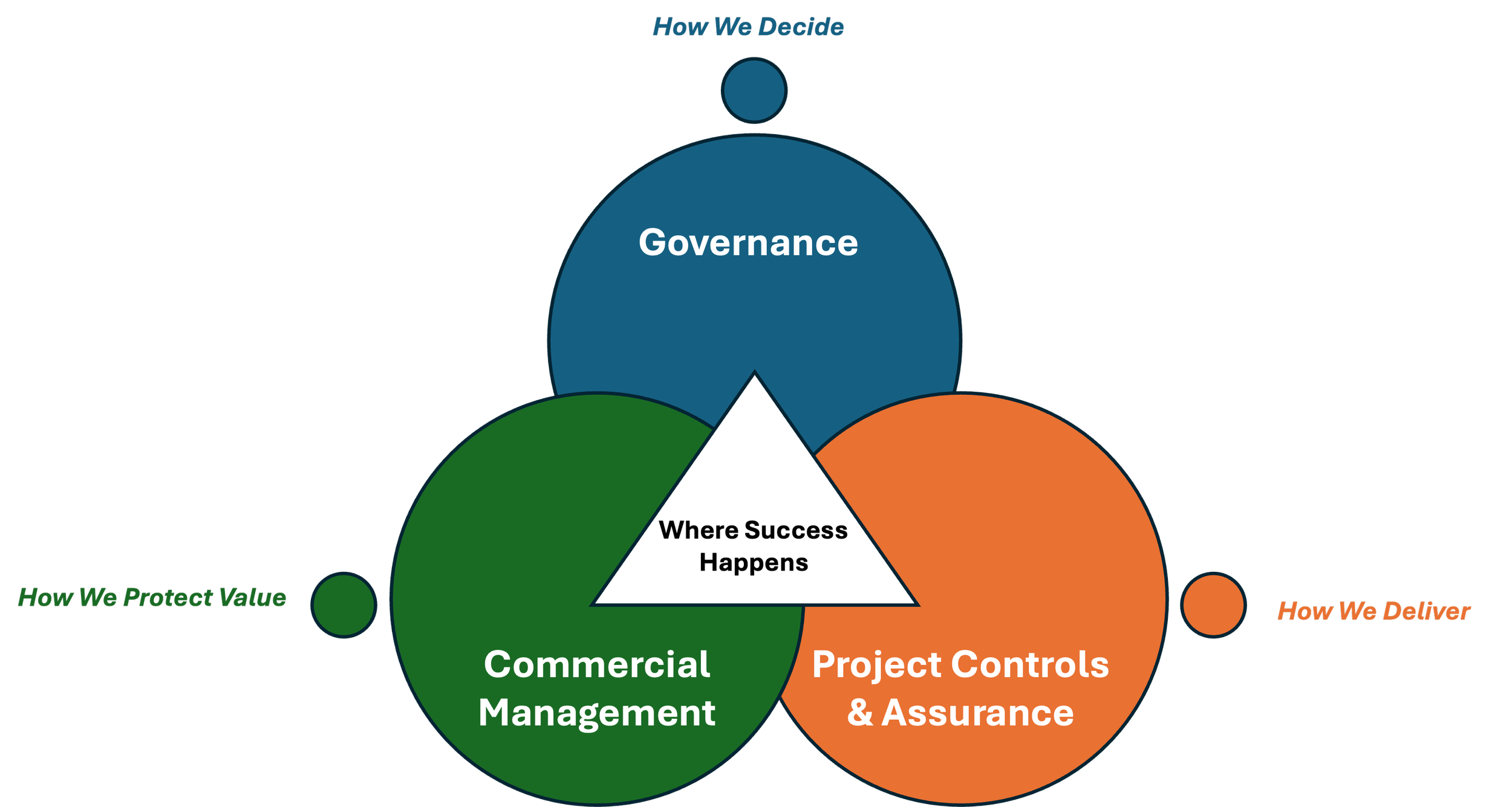
Project Controls & Assurance
How We Deliver
Project Controls protect the performance of the project.
They ensure:
The programme is realistic and monitored
Risks are identified and mitigated
Design is coordinated and controlled
Approvals are secured
Logistics are planned
Completion is structured
Controls are what keep the project on track. Without controls, even well-led projects lose momentum.
Commercial Management
How We Protect Value
Commercial Management safeguards the financial integrity of the project.
It governs:
Budget discipline
Procurement strategy
Contract administration
Change control
Cost transparency
Commercial discipline protects margin, funding confidence, and investor trust. Without commercial control, projects may be delivered but not according to budgets and expectations
The Intersection
Where Success Happens
These three pillars do not operate independently.
Governance directs
Controls deliver
Commercial protects value.
The real strength of the Project Delivery System lies in the overlap:
Decisions affect cost and time
Programme affects cash flow
Procurement affects risk
Risk affects governance.
The centre of the diagram represents integration — where authority, performance, and financial discipline operate together.
That integration is the essence of the PDS methodology. It is how complex projects move from intention to controlled delivery.
Our Approach
A structured project delivery framework
Our Project Delivery System (PDS) is an integrated operating system built around three interdependent pillars. Each pillar answers a fundamental question in project delivery.
Governance
How We Decide
Governance defines the authority structure of the project.
It determines:
Who is accountable
Who has delegated authority
How decisions are requested
How issues are escalated
Where performance is reviewed
Governance creates clarity. It prevents confusion, political bottlenecks, and informal decision-making. Without governance, projects drift because decisions drift.